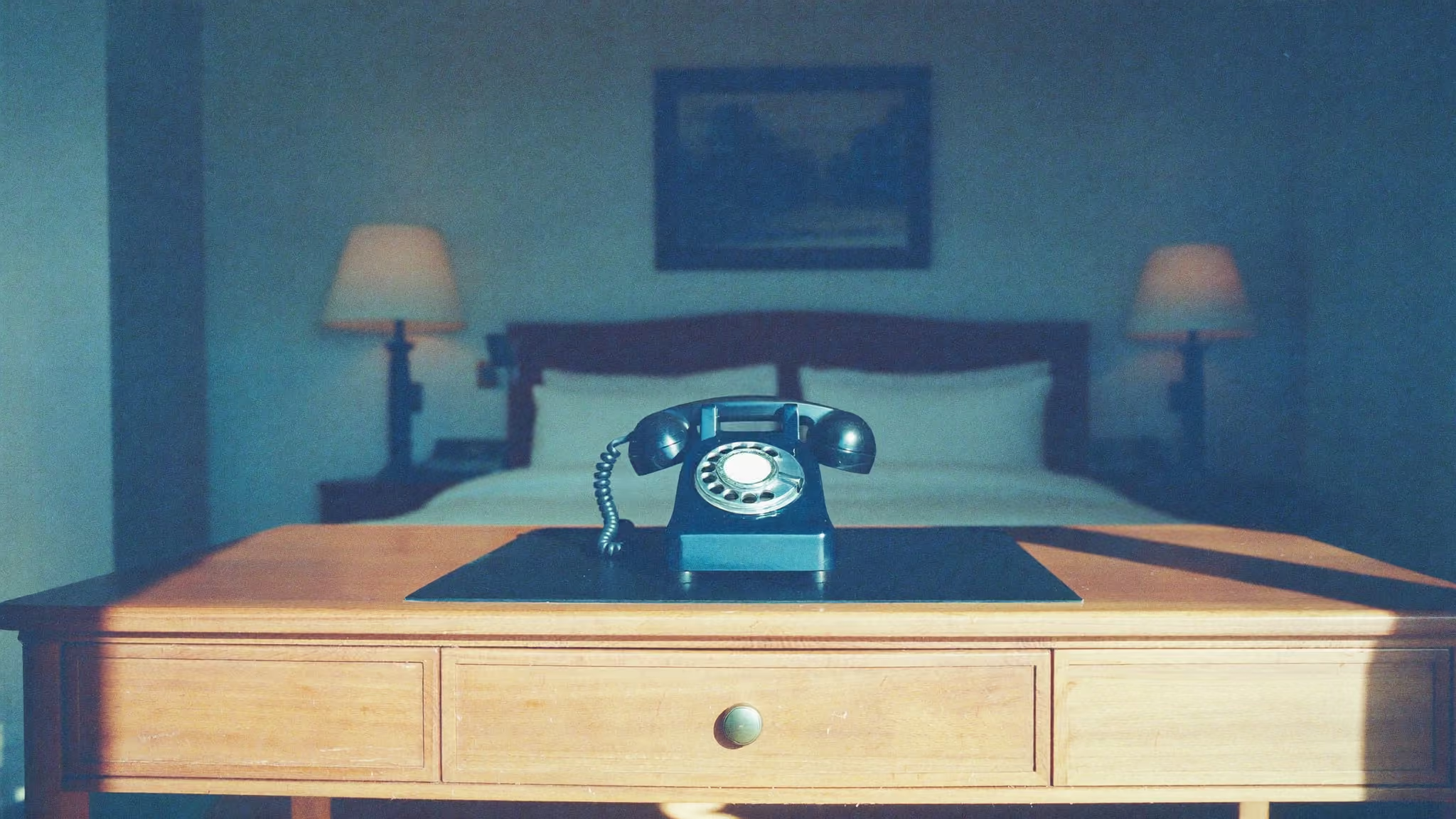
Aug 14, 2026


The same hotel room costs different on each site because the sites are not selling the same thing at the same cost. The channel commission, private rates you only see on some sites, prices that shift with demand and taxes that show up at the end explain almost all of the gap.
In short
- The same room shows different prices because each site starts from a different cost and displays rates, taxes and currency in its own way.
- The commission a hotel pays on a platform booking usually sits between 15% and 25%, and that margin is part of what moves the price.
- Member and private rates only appear once you sign in or join a programme, so not every page shows the same number.
- The price shifts with demand and dates, not because the site knows who you are.
- Since late 2024, a hotel can publish a lower price on its own site than on the platform, something parity used to limit.
Why does the same room have several prices at once?
The same room has several prices at once because each channel sells it under its own rules and costs. A platform, the hotel site and a wholesaler list the same inventory on different terms. When you book direct with the hotel, you deal with whoever sets that price; on a platform, you see the one that platform has chosen to show. Neither is lying: they start from different points.
The commission the hotel pays shifts the margin
For every booking that arrives through a platform, the hotel pays a commission on the price, and that cost shapes the margin each channel plays with. By industry estimates, that commission usually sits between 15% and 25% of the amount, and it varies with the channel, the country and the rate type. A hotel that saves that commission by selling on its own site has room to adjust the price or add an extra like breakfast, though it is not obliged to.
Member and private rates: not every site shows the same thing
Member and private rates explain much of the difference, because they do not appear everywhere or for everyone. Many hotels and platforms hold a lower price for people who sign in or belong to a loyalty programme, and that price is hidden if you browse without an account. The same goes for package rates, where the room is bundled with a flight or a car and stops showing on its own. The best price guarantee some chains offer, in fact, is only claimed against public rates, never against these.
Dynamic pricing: the number moves with demand
The price of one room moves on its own because almost every channel uses dynamic pricing, which rises or falls with demand, the dates and how much is left to sell. Two sites can refresh that calculation at different moments, so one shows the new rate while the other still shows the old one. That is why the same stay can cost different in the morning and in the afternoon, with nobody changing anything by hand.
Taxes, fees and currency: why the price rises at the end
A good part of the difference you see is not in the room, but in how each site shows taxes, fees and currency. Some display the price with VAT and the tourist tax included from the start, and others add them at the last step, right before you pay. If the page also converts to your currency at its own rate, the number can shift by a few euros. To compare properly, always look at the full price with everything included, not the first one that appears.
Rate parity: what changed and why it matters
Rate parity is an arrangement that for years limited how far a hotel could cut its public price, and it explains why you almost never used to see the hotel site below the platform. That changed: in the European Economic Area, Booking.com removed those parity clauses in late 2024, after the European Commission reminded it of its obligations under the digital markets rules. In parallel, Spain's CNMC fined Booking.com in 2024 for imposing, among other things, a parity clause; that penalty is under appeal and suspended pending a ruling. For you, the practical upshot is simple: the hotel site can now publish a lower price than before, so comparing it is worth the effort.
Does the price rise if you search twice?
The idea that the price rises because you searched twice or because the site stored your cookies gets around a lot, but it is not clearly proven. What does move the number are things we have already seen: dynamic pricing, rates that expire and differences in tax or currency. If it worries you, try an incognito window: you will almost always find the change lines up with demand or the date, not with your history.
When you will barely notice a difference
There is not always a big gap between sites. Margins tend to be thin in these cases:
- Big chains with the same public rate on their site and on the platforms for those dates.
- High-demand or nearly full hotels, where there is no room to drop the price.
- Last-minute bookings, when every channel converges on the same available rate.
- Identical non-refundable rates, which replicate the same on each site.
How to compare without doing it by hand
Comparing the real price of the same room across sites is the step that keeps you from overpaying, and there is no need to repeat it by hand every time. The Directo extension compares the hotel direct price while you browse and shows you where the best rate for the same stay is, taxes included. More than 300,000 travellers use it, so you can see at a glance whether the difference is real.
Frequently asked questions
Why does the same hotel have different prices on each site?
Because each channel starts from its own cost and rules: the commission the hotel pays, private rates you only see once you sign in, prices that shift with demand and the way taxes and currency are shown. It is not an error, it is how hotel distribution works.
Is it cheaper to book on the hotel site?
Sometimes yes and sometimes no. Since late 2024 a hotel can publish lower prices on its site without the parity limit, but a platform may have a one-off deal or a negotiated rate. The only way to know is to compare the full price for the same room and dates.
Why does the price rise right at payment?
Almost always because of taxes and fees some sites add at the end, such as VAT or the tourist tax, and sometimes the currency conversion. The room has not gone up: it is the same price shown a different way. Always check the full total with everything included before comparing.
What is a member rate and why can I not see it?
It is a lower price held for people who sign in or belong to a loyalty programme. It does not appear if you browse without an account, so two people can see different prices for the same room. Creating the account is usually free and unlocks that rate.
How do I compare a hotel price properly?
Fix the same room, the same dates and the same cancellation policy, and compare the full price with taxes included on each site. Check too whether there is a member rate once you sign in. A tool that does it for you avoids comparing numbers that are not equivalent.

.avif)